A stock’s price is a bet on the future, which is why the number that matters in an earnings report is rarely the one in the headline. It is the sentence about next quarter.
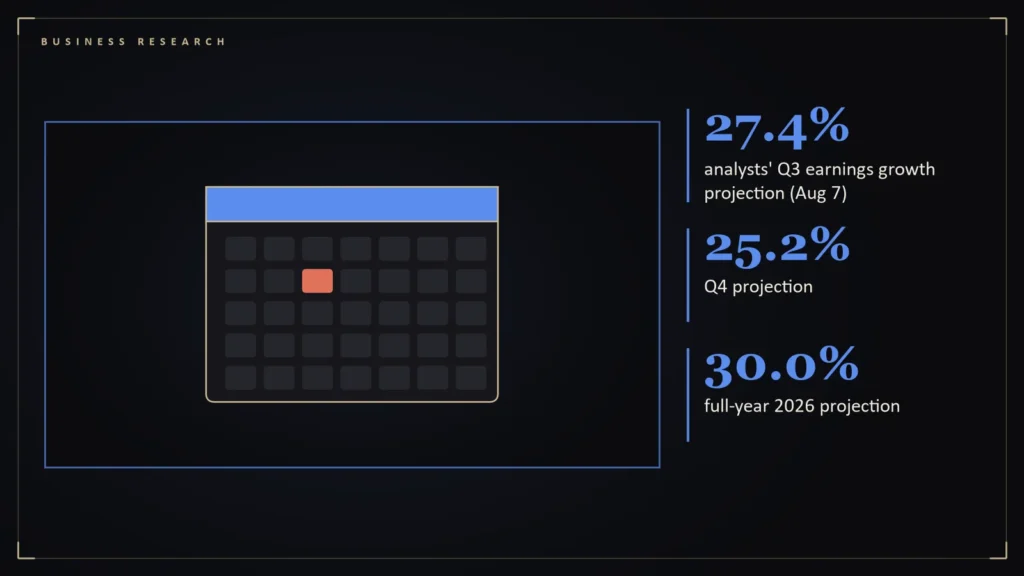
- As of August 7, 2026, analysts projected S&P 500 earnings growth of 27.4 percent for Q3, 25.2 percent for Q4 and 30.0 percent for full-year 2026 [1].
- On July 24 the equivalent projections were 27.3, 24.9 and 27.3 percent [2].
- Estimates rose between the two dates, a sign analysts were upgrading their forecasts as results arrived [1][2].
- Guidance, a company’s own outlook, often moves its stock more than the quarter just reported.
What analysts expect
FactSet’s August 7 update shows analysts projecting S&P 500 earnings growth of 27.4 percent in the third quarter, 25.2 percent in the fourth, and 30.0 percent for full-year 2026 [1]. Two weeks earlier, on July 24, the same projections were 27.3 percent, 24.9 percent and 27.3 percent [2]. The full-year figure rose almost three points in two weeks, mostly because the second-quarter actuals came in far above forecasts.
Why forward numbers matter more
The market has already priced the past. What moves a stock after earnings is how the report changes expectations for the next several quarters: whether management raises, maintains or cuts its outlook, and whether it explains why. A company can beat estimates and fall if its guidance disappoints, or miss and rise if its outlook improves.
What could change the forecasts
- Energy prices: the energy sector’s contribution depends on oil staying high; Brent traded at about $102 in early October [3].
- Interest rates: the Fed raised its target range to 3.75 to 4.00 percent on September 16 and the 10-year yield is above 5 percent [4][5].
- One-time gains: some of Q2’s growth reflected investment gains that may not recur [1].
What moved between the two snapshots
Comparing the two FactSet notes shows where the upgrades came from. The estimate for the third quarter rose from 27.3 to 27.4 percent between July 24 and August 7, the fourth quarter from 24.9 to 25.2 percent, and the full year from 27.3 to 30.0 percent [1][2]. The forward 12-month price-to-earnings ratio edged down from 20.1 to 20.0 [1][2]. In other words, the quarters still to come barely changed, while the full-year figure jumped 2.7 points because the second-quarter actuals were far above expectations, blended growth moving from 37.9 to 50.4 percent over those two weeks [1][2].
That is a useful distinction. A full-year estimate is a blend of reported and expected quarters, and its jump says more about what has already happened than about what analysts now expect. The forward-looking signal is in the small upward drift of 0.1 and 0.3 points for the next two quarters. The July note also counted 177 companies still to report the following week, so some of the revisions were still arriving [2]. Reading guidance means watching those next-quarter changes, not the full-year headline.
A sensible way to read the estimates
Forecasts for earnings growth in the mid-twenties percent would be historically strong. They are also predictions made while oil is above $100 and rates are rising, which are conditions that have a way of altering forecasts. Treat them as a snapshot of analyst mood. When the next earnings season begins, compare actual results with these figures to see whether the optimism was warranted. This is analysis, not investment advice.
Questions readers ask
What do analysts expect for S&P 500 earnings growth in 2026?
As of August 7, about 27.4 percent in Q3, 25.2 percent in Q4 and 30.0 percent for the full year [1].
Why does guidance matter?
Because stock prices reflect expectations for the future, a company’s outlook often moves its shares more than the quarter it just reported.
References
- S&P 500 Earnings Season Update, August 7, 2026 — FactSet — https://insight.factset.com/sp-500-earnings-season-update-august-7-2026
- S&P 500 Earnings Season Update, July 24, 2026 — FactSet — https://insight.factset.com/sp-500-earnings-season-update-july-24-2026
- Brent Crude Oil (BZ=F) Historical Prices — Yahoo Finance — https://finance.yahoo.com/quote/BZ%3DF/history/
- Federal Reserve Press Release, September 16, 2026 — Federal Reserve Board — https://federalreserve.gov/newsevents/pressreleases/monetary20260916a.htm
- CBOE 10-Year Treasury Yield (^TNX) Historical Data — Yahoo Finance — https://finance.yahoo.com/quote/%5ETNX/history/