Do You Own Your Music? Streaming Is a Library Card, Not a Shelf
Streaming rents you access; a lossless download is a file you keep. What the two really cost, who gets paid, and how to use each sensibly.
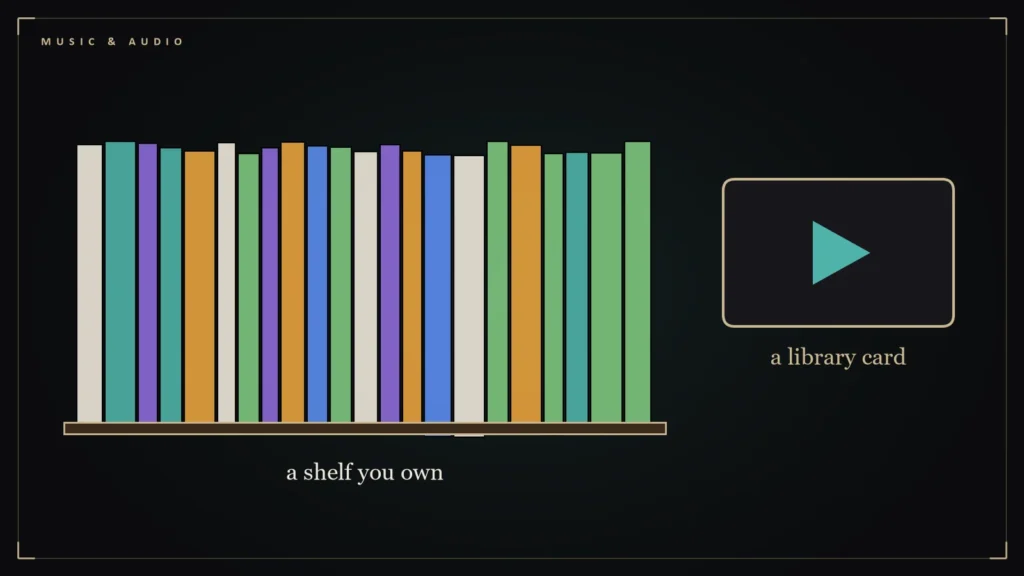
A streaming subscription is a library card. It lets you borrow an astonishing amount of music, and the moment you stop paying the card is declined and the shelves are locked. A download is a shelf of your own. Both are useful, and confusing them is how people end up with a hundred playlists and no music.
- Streaming is access, not ownership: stop paying and the library goes silent.
- Third-party estimates put Spotify’s payout at roughly £0.003 to £0.005 per stream, paid to rights holders rather than to artists directly [1].
- Spotify keeps around 30 percent of revenue and passes about 70 percent to rights holders, who then pay artists under their own agreements [1].
- A sensible split: use streaming to discover music, and buy a lossless download of the records you will want in ten years.
What you actually have when you stream
When you cancel, your access goes with it. Albums also vanish when licensing deals lapse or rights holders pull a catalogue, and remasters can quietly replace the version you loved. None of that can touch a file sitting on your own drive. For the full case on formats, see what lossless audio is; for the short one, a downloaded lossless file plays at full quality offline, with no connection and no subscription in the way.
Who gets paid
Spotify pays rights holders, not artists directly, and there is no official per-stream rate. Musosoup, an artist-promotion platform, estimates the figure at between £0.003 and £0.005 per stream, or about £3,000 to £5,000 per million streams [1]. The underlying mechanism is a shared pool: Spotify keeps roughly 30 percent of revenue, divides the remaining 70 percent among rights holders in proportion to their share of all streams, and distributors and labels then settle up with artists [1]. For a band without a label, an album bought directly can be worth thousands of streams. That is not a moral argument, just arithmetic.
The math over time
A subscription is a bill with no finish line: years of payments, and at the end you own nothing. A download is a one-time cost per album and every one you buy is permanent. Neither is automatically cheaper. For someone who plays a few hundred albums on rotation, the subscription wins on convenience. For someone who plays the same forty records for twenty years, the shelf wins on price.
Where streaming is the right tool
- Discovery. Sampling a huge amount of new music for the price of one album a month.
- Background listening where permanence and fidelity matter less.
- Shared households that want casual access without managing files.
Build a shelf that outlasts the app
Use streaming as the radio, then buy what you keep returning to. Start with the five albums you reach for most, buy them in lossless, and back the files up to a second drive. That collection no longer depends on anyone’s catalogue decisions. Godlike is built this way: every release is a lossless WAV and hi-res FLAC download you own outright, previewable for free. Meet the bands, browse the discography, and if you are new to buying, read where to buy lossless music.
Questions readers ask
Is buying music better than streaming?
For records you care about, buying keeps them permanently and sends more of your money to the artist; streaming is better for discovery and casual listening [1].
What happens to streamed music if I cancel?
You lose access to it. Files you have purchased and downloaded stay on your devices.
How much do artists earn per stream?
There is no official per-stream rate; one third-party estimate puts it at £0.003 to £0.005 per stream, paid to rights holders [1].
References
- Spotify Payouts Explained: How Much Does Spotify Really Pay Per Stream? — Musosoup — https://musosoup.com/blog/spotify-payouts-explained-how-much-does-spotify-really-pay-per-stream