Roman Space Telescope Launches: A Wide-Angle Eye Heads for L2
NASA's Roman Space Telescope launched August 30, 2026 on a Falcon Heavy. Its camera surveys the sky about 1,000 times faster than Hubble. First images are due in early 2027.
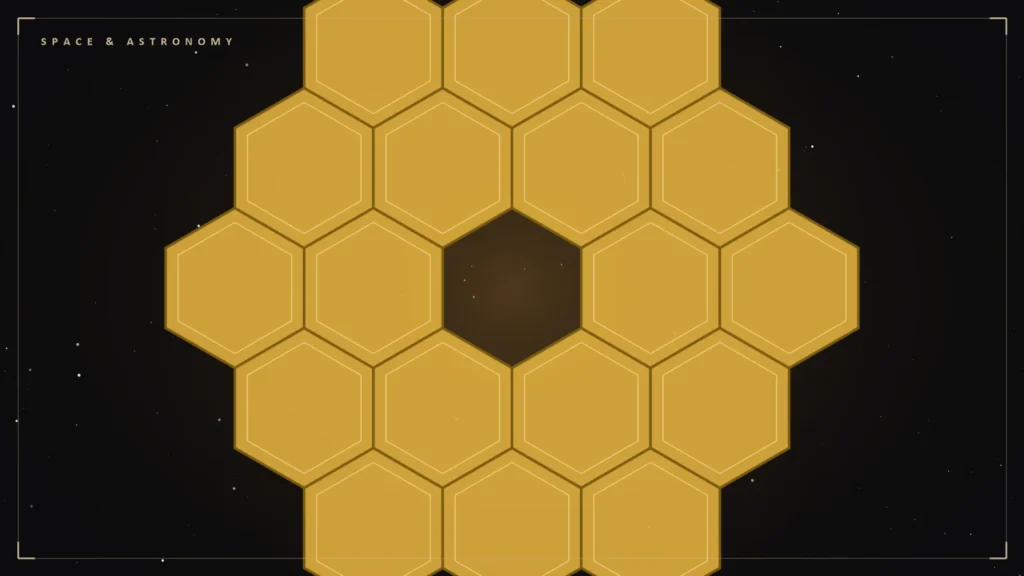
Hubble looks at the universe through a keyhole, beautifully. Roman is built to open the door. On August 30, 2026, NASA’s Nancy Grace Roman Space Telescope lifted off from Launch Complex 39A at Kennedy Space Center on a SpaceX Falcon Heavy at 7:26 a.m. EDT [1].
- The Nancy Grace Roman Space Telescope launched August 30, 2026 at 7:26 a.m. EDT on a SpaceX Falcon Heavy from Kennedy Space Center [1].
- It is traveling about one million miles to the Sun-Earth L2 point during a three-month commissioning period, with first images expected by early 2027 [1].
- Its roughly 300-megapixel infrared camera will survey the sky about 1,000 times faster than Hubble and return 1.4 terabytes of data a day [1].
- NASA expects it to find more than 100,000 exoplanets and billions of galaxies over a five-year mission [2].
The first hours
The rocket separated from the observatory 31 minutes into flight, and Goddard received telemetry seven minutes after launch. Roman’s solar panels and sun shade deployed at one hour and 23 minutes, with the high-gain antenna and aperture cover to follow within days [1]. The telescope is now making a roughly one-million-mile trip to the Sun-Earth L2 point, with a three-month commissioning period before science begins [1]. NASA Administrator Jared Isaacman said the mission was “delivered ahead of schedule and on budget” [1].
Why the camera matters
Roman’s 300-megapixel infrared camera is the star: it surveys the sky roughly 1,000 times faster than Hubble and will send down 1.4 terabytes of data a day, the highest data rate of any NASA astrophysics mission [1]. The Wide Field Instrument can capture regions of sky larger than a full moon, and a coronagraph aboard serves as a technology demonstration for directly imaging exoplanets by blocking starlight [2].
What it hopes to find
Over a five-year primary mission, NASA expects Roman to discover more than 100,000 distant exoplanets, hundreds of millions of stars and billions of galaxies, while probing dark energy and dark matter [2]. Three core surveys will use about 75 percent of observing time: one of distant galaxies, one for time-domain phenomena, and a microlensing survey of the Milky Way’s galactic bulge to find planets, including some in habitable zones [2].
The hardware and the team
NASA describes the Wide Field Instrument as a 300-megapixel infrared camera built from 18 4K detectors, each roughly the size of a saltine cracker, surveying the sky 1,000 times faster than Hubble; the telescope will send back 1.4 terabytes a day, NASA’s highest data rate for any astrophysics mission to date [1]. It launched from Launch Complex 39A at Kennedy Space Center and will spend three months traveling to L2 and being commissioned [1]. A second instrument, the Coronagraph, will demonstrate technology for imaging Jupiter-like planets, laying groundwork for future missions that search for Earth-like worlds [1].
The mission is an international effort. Industrial partners include BAE Systems, L3Harris Technologies and Teledyne Scientific & Imaging, and contributors include the European Space Agency, JAXA, the French space agency CNES and the Max Planck Institute for Astronomy; NASA’s Nicky Fox leads the Science Mission Directorate and Julie McEnery is senior project scientist at Goddard [1]. Administrator Jared Isaacman said the mission was delivered ahead of schedule and on budget, reflecting more than a decade of dedication [1]. The science goals are dark matter, dark energy, exoplanets and cosmic history [1].
When to expect results
The Wide Field Instrument is expected to be activated within weeks, and the first images are anticipated by early 2027 [1]. Until then, the interesting numbers will be engineering ones: whether the mirror cools correctly, whether the instruments wake up, whether the data begins to flow. A telescope this ambitious earns its reputation in the first year.
Questions readers ask
When did the Roman Space Telescope launch?
August 30, 2026, at 7:26 a.m. EDT aboard a SpaceX Falcon Heavy from Kennedy Space Center [1].
When will Roman's first images arrive?
NASA anticipates first images by early 2027, after a three-month commissioning period [1].
References
- NASA's Dark Universe-Seeking Nancy Grace Roman Space Telescope Launches — NASA — https://www.nasa.gov/news-release/nasas-dark-universe-seeking-nancy-grace-roman-space-telescope-launches/
- NASA Completes Nancy Grace Roman Space Telescope Construction — NASA — https://www.nasa.gov/missions/roman-space-telescope/nasa-completes-nancy-grace-roman-space-telescope-construction/