How Blue Jeans Were Born From a Copper Rivet Patent
A May 20, 1873 patent for copper rivets on pants went to a Nevada tailor and Levi Strauss. The origin of blue jeans, 'waist overalls' and the 501.
Blue jeans look like fashion, but they began as hardware. The idea was simple enough to fit in a pocket: put a metal rivet where a seam is most likely to split. That small act of reinforcement became one of the most recognised garments in the world.
- The original patent for using rivets on men’s pants was granted on May 20, 1873 [1].
- Jacob Davis, a Nevada tailor, partnered with Levi Strauss on the design [1].
- The product was first called ‘waist overalls’, also known as ‘XX’ [1].
- The 501 name came in 1890, when lot numbers were first introduced to tell products apart [1].
A tailor, a partner and a patent
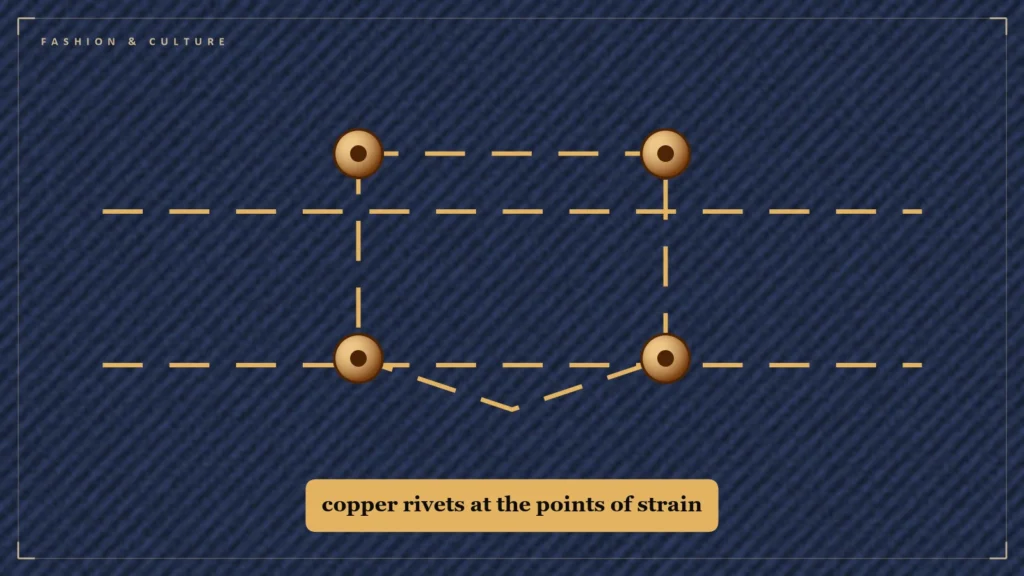
Levi Strauss & Co. says the original patent for using rivets on men’s pants was granted on May 20, 1873 [1]. Jacob Davis, a Nevada tailor, developed the riveted design and partnered with Levi Strauss. The company describes it as a patent to make the first riveted pockets on pants for working western pioneers, using copper rivets at the points of strain [1].
Not yet called jeans
The first product did not have a catchy name. It was the “copper riveted waist overalls,” sometimes called “XX” [1]. A waist overall was a work garment worn at the waist, as opposed to a bib overall.
How 501 became a name
The famous number came later. In 1890, lot numbers were introduced to differentiate products, and the 501 was officially named when its number was assigned [1]. It is a reminder that many enduring brand names started as filing codes.
Why the design lasted
Think of a rivet as a stitch you cannot cut. Work wear fails at the same spots again and again: pocket corners, the base of a button fly. Reinforcing those points is cheap engineering with a big payoff in durability, which is why a design from the 1870s is recognisable today.
The company’s own account
Levi Strauss & Co.’s history of denim treats May 20, 1873 as the birthday of blue jeans and cites patent number 139,121, granted to Levi Strauss and Jacob Davis for “the process of putting rivets in men’s work pants” [2]. Strauss was a Bavarian-born merchant who arrived in San Francisco in 1853 at age 24 to set up a wholesale dry-goods branch, and Davis was a tailor who had the idea after a laborer’s wife asked for pants that would last, putting metal rivets at points of strain such as pocket corners and the base of the button fly [2].
The first riveted pants were made of denim, which the company calls the traditional fabric for men’s workwear, and they were sold as “waist overalls” or “overalls” until the 1960s, when baby boomers adopted the word “jeans” [2]. So the name that now seems timeless is younger than the garment by almost a century. The company page does not cover denim’s earlier European origins or later twentieth-century milestones, so this article leaves those to other sources [2].
What the company source does not give
The Levi Strauss page used here gives dates and names, but not the patent number or original prices, so none are claimed. Corporate histories also tell the story the company wants told. For a cultural view of how clothing aesthetics evolve, read our piece on brutalist and wabi-sabi fashion.
Questions readers ask
When was the blue jeans patent granted?
The original patent for using rivets on men’s pants was granted on May 20, 1873, according to Levi Strauss & Co. [1].
What were blue jeans first called?
They were first called copper riveted ‘waist overalls’, also known as ‘XX’ [1].
References
- Happy 143rd, Blue Jeans!, Levi Strauss & Co. — https://www.levistrauss.com/2016/05/19/happy-143rd-blue-jeans/
- The History of Denim, Levi Strauss & Co. — https://www.levistrauss.com/2019/07/04/the-history-of-denim/